
Hi! I’m Madi.
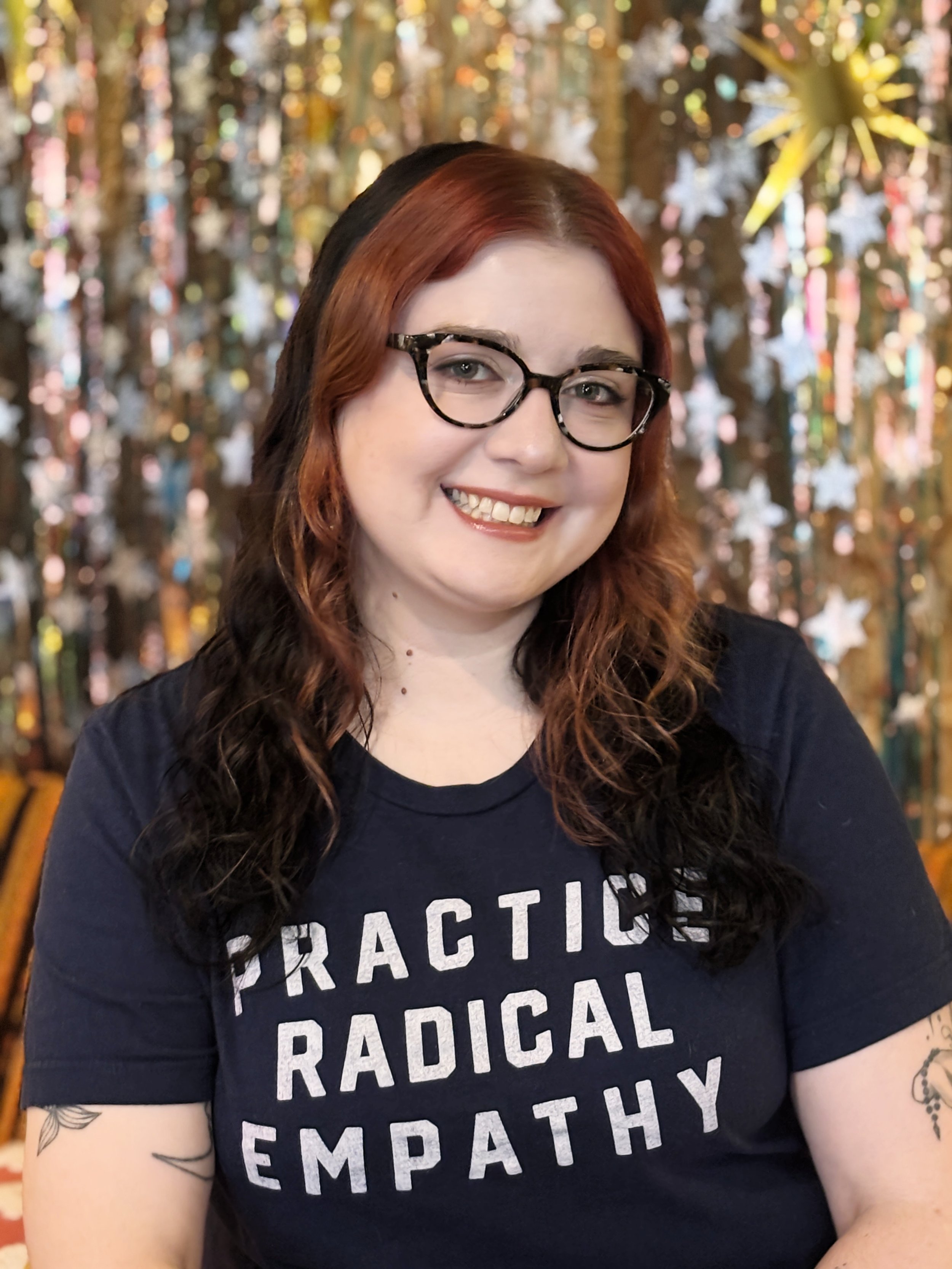
I’m a full spectrum doula, social worker, and co-owner of Roots & Ritual, a witchy shop in Chicago. All of my work is rooted in trauma-informed, collaborative, relational, compassionate, and inclusive care (more on what this actually means below!).
As a social worker, I’ve spent over 11 years working in non-profits, primarily in direct service roles supporting people from diverse backgrounds across the lifespan. A through line of my work has been walking alongside people during some of life’s biggest transformations.
In my day to day life, I love to read, cook, spend time with my partner, our pets, and our friends, pull tarot cards, make witchy wares for my shop, and write poetry.
My Education and Background
Full Spectrum Doula Training (2026) with Birthing Advocacy Doula Trainings
Childbirth Educator Training (2026, in progress) with Birthing Advocacy Doula Trainings
Master of Social Work (2022), Fordham University
Bachelor of Social Work (2018), Portland State University
I have worked in non-profits for over a decade in a variety of roles. Currently, I work at one of the largest LGBTQ+ healthcare organizations in the country, but I’ve worked across the fields of mental health, youth services, case management, and nonprofit consulting. Across every role, I’ve remained committed to equity, trauma-informed care, harm reduction, and building relationships rooted in trust, compassion, and care.
My Lenses
My work is rooted in trauma-informed, collaborative, relational, compassionate, and inclusive care. I like to think of these not just as my values, but as my lenses - everything that I do is filtered through these concepts and the care that you receive from me will be too. If you’re wondering what any of this actually means in practice, let me break it all down.
-
I move through the world keeping the knowledge that everyone we encounter has experienced their own trauma(s) close to me. How trauma lives in our bodyminds, shapes our behavior, and affects how we show up in difficult moments is different for everyone. This is why it’s important for me to uphold the tenets of trauma-informed care - safety, transparency, collaboration, humility, empowerment, choice, and peer support - in all of the work that I do.
This can look like explaining why I am asking something before I ask it, asking for consent before touching a doula client, being curious about someone’s story rather than making assumptions about it, noticing when someone appears to be dysregulated and slowing down rather than trying to push through a conversation, offering all available choices and asking someone how they’d like to proceed, and so much more!
-
I’m not the expert on your life — you are! I bring my knowledge, experience, and skills to the partnership, but I cannot make decisions for you or know what is best for you.
Working collaboratively can look like starting our consult call off by asking what support you’re looking for rather than assuming I already know, checking in throughout our work together about whether we’re addressing your needs, and co-creating goals and plans.
-
I firmly believe that relationship is at the foundation of any meaningful work. Establishing a relationship and building trust creates an environment where transformation can happen.
This can look like asking you how you are (genuinely!), remembering what you said a couple of months ago and checking back in about it, showing up consistently, learning how you communicate and adapting around that, and being fully present in all of our interactions.
-
I approach everyone with genuine warmth. To me, compassion is a commitment to seeing everyone’s humanity and responding to people with care.
Being compassionate looks like sitting with someone in a difficult moment and not rushing to fix things, listening without judgment, mirroring the energy and language of the person I am working with, and creating an environment where there’s always space for emotions (yes, even and especially the “difficult” ones!).
-
I actively work to ensure that folks who are most overlooked, harmed, and excluded from systems feel welcomed and centered in my practice. It’s important to consistently examine who is being left out, whose story is not being told, and who is not being served, and to think about how we collectively can do things differently.
In my practice, this can look like having questions on my intake forms for doula clients that ask about your family structure, pronouns, and what language you use for your body, being unapologetically affirming, not asking you to educate me about your identities, and having resources at the ready for affirming providers.